





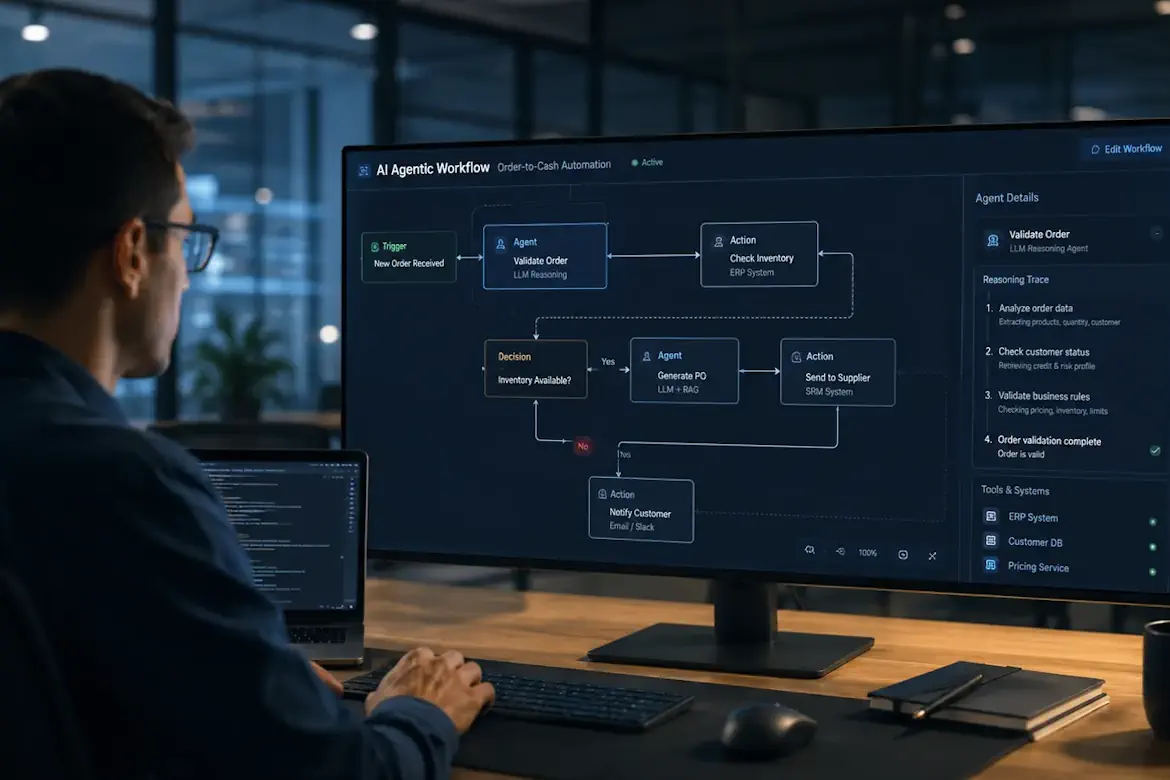
AI Automation is not something for the future; it is reality in 2026. The benefits of customer service automation have increased, with new tools on the rise that are automating how businesses are providing customer service, from taking support queries to handling customer invoicing to scheduling customer meetings. What were once manual operating companies are now being supported by intelligent automation to improve employee time to be focused on company growth.
Also, they can complete menial, repetitive tasks more rapidly and precisely than a human counterpart. Businesses are starting to realize how crucial staff time management is when focused on strategic, creative, customer-focused tasks instead of mundane, administrative tasks. Thus, Artificial Intelligence systems are taking the 2026 workplace.
Automating Customer Support
The most obvious changes perhaps lie in customer service. Chatbots and virtual assistants can now provide 24/7 real-time assistance to customer inquiries and are capable of handling most common inquiries, order tracing, reimbursements, and providing troubleshooting assistance.
People no longer need to carry big support teams for repetitive questions; with the help of AI automation, businesses can cut down on the time it takes to respond to questions and enhance customer satisfaction. Most of the time, the companies are able to run efficiently while still providing quality support, as human agents are only involved in complex or sensitive situations.
Automated Data Entry and Document Processing
For many years, data entry has been one of the most time-consuming processes in businesses. By 2026, AI will be able to automatically extract all data out of forms, invoices, emails, and documents, with no human input whatsoever.
Financial services, logistics, and health services industries will be using AI automation to deal with enormous amounts of data, in a matter of seconds. Not only will the amount of errors decrease, but the overall performance will increase substantially. No more hours wasted entering and updating data into spreadsheets, no more transferring from system to system.
AI in Marketing Automation
AI is helping the marketing department to complete routine tasks automatically. Emails are being sent automatically by intelligent systems, and social media posts are being managed by automated processes. Lead nurturing, audience segmentation, and ad optimization are being managed by intelligent systems.
It is being utilized by businesses for their content strategy, to define customer behaviors, and to evaluate campaign performance this year. Instead of working with individual campaigns and marketing activities, the department can concentrate on strategy and creativity.
Streamlining Human Resource Operations
The HR department is now adopting AI automation in other tasks, like CV screening, scheduling of interviews, onboarding of employees, and attendance maintenance, etc., awhich re also now handled through the automated AI-enabled systems. Moreover, the payroll and application of leaves to employees, internal communications, etc., are made more convenient for employees through the AI-enabled automation system.
Finance and Accounting Automation
Accounting and financial management processes can be very numerous and clerical; most are suited to automation. In 2026, firms began using AI in their financial management and accounting as part of invoicing and expensing processes, as well as tax calculations and financial reporting.
Supply Chain and Inventory Management
AI-powered automation is also enhancing the functioning of a supply chain by forecasting demand, tracking inventory, and streamlining procurement. Predictive Analytics can help businesses to prevent stock shortages and overstocking.
Artificial intelligence systems are more often integrated into warehouses to automate the movement of products, optimise storage, and monitor shipments. AI systems are now increasingly adopted by warehouses to improve material movement, store products more efficiently, and keep track of deliveries, which reduces shipping delays.
Enhanced productivity and employee satisfaction
While there are fears that AI will take over jobs, numerous companies are adopting the technology to complement their workforce, not replace it. This eliminates repetitive tasks and allows employees to concentrate on higher-value tasks that involve creativity, decision-making, and human interaction.
AI automation alleviates the stress in the workplace due to repetitive tasks and makes teams more productive. An employee can work more hours on innovative work, customer relationships, business development, and less on repetitive tasks.
The Future of AI Automation
As the world progresses with technology, automation will become more complicated than ever in the coming years. By 2026, the company will have already built into its day-to-day business operation by 2026, and become different and stand out among others in this fast-evolving business world.
The leading adopting companies of AI automation are rewarded with an increase in productivity, customer satisfaction, and profit. Customer service, Marketing, Finance, Human Resources, etc., are becoming smarter with the usage of AI in business operations and achieving success.